STUDENT RESEARCH TO BE PUBLISHED
9/25/2026
Research by Montrose School students has been selected for publication in BioTreks, an international peer reviewed journal for high school synthetic biology.
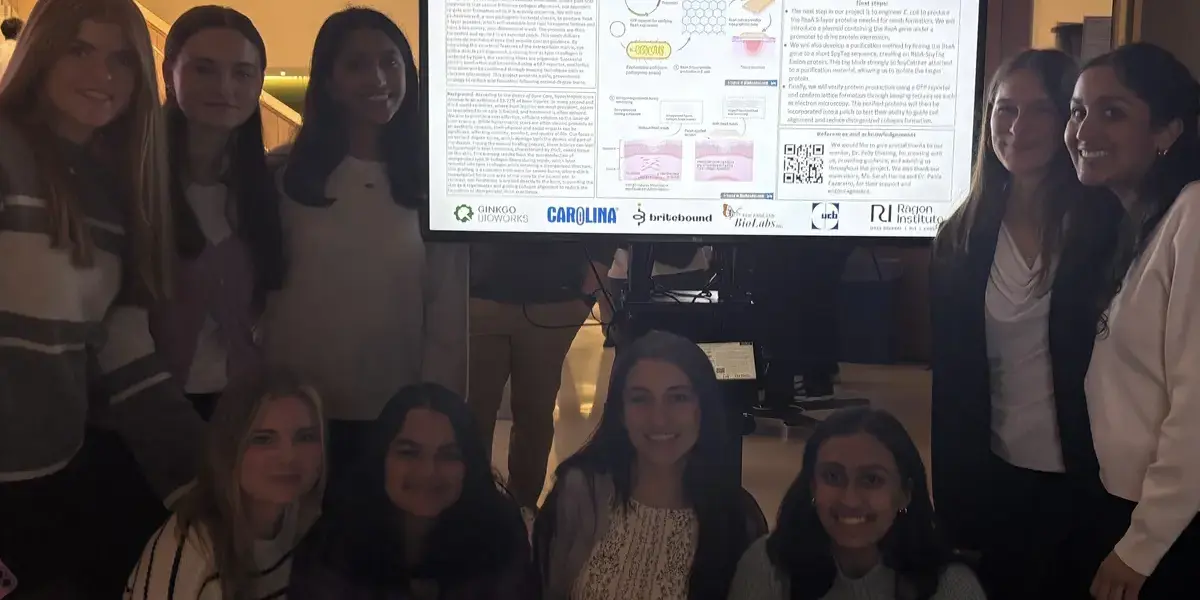
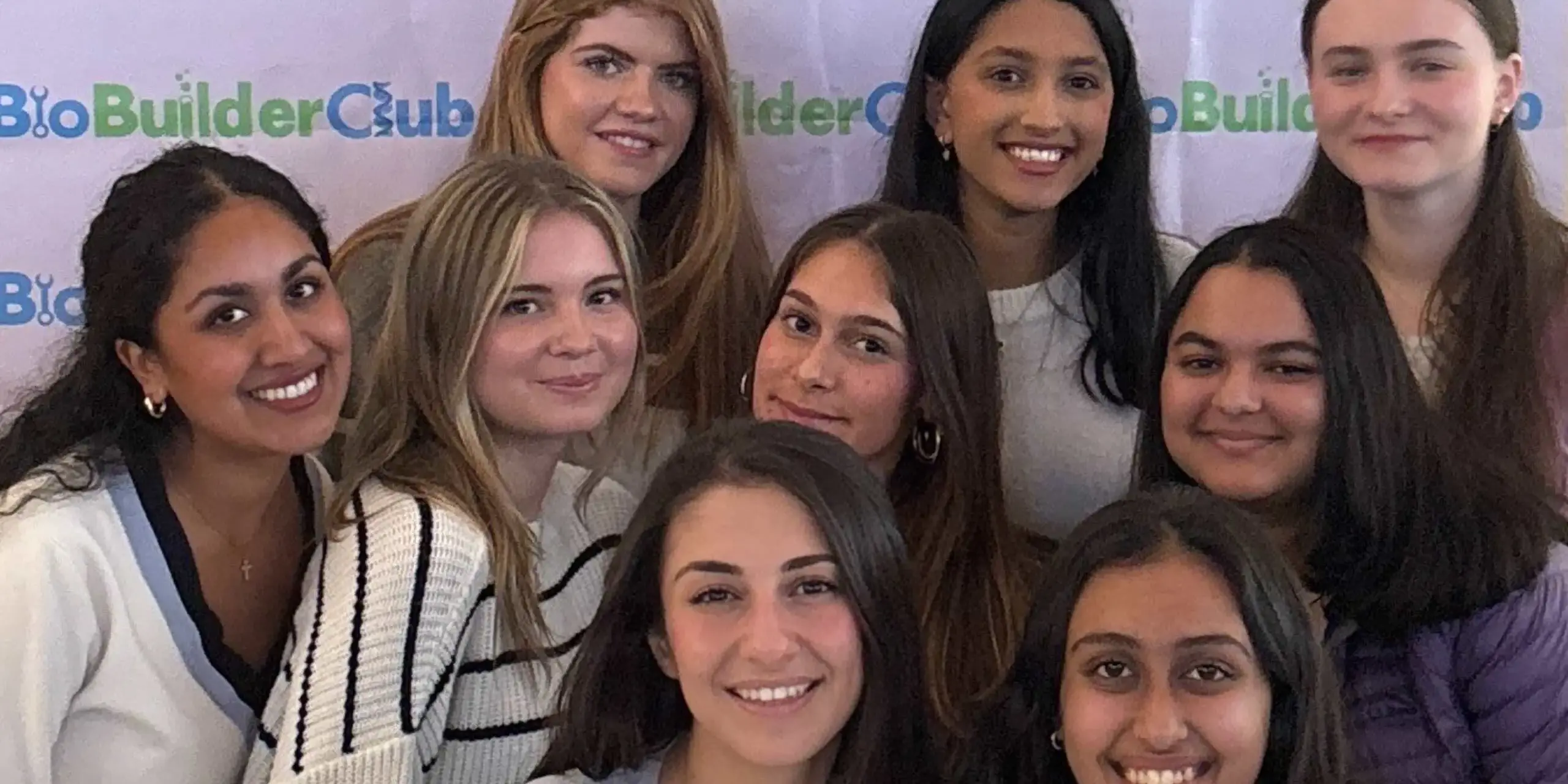
Congratulations to Ruby Q. '27, Aneesa M. '27, Tvesha P. '27, Siena E. '27, Elena S. '27, Leah V. '27, Sophia H. '27, and Chloe D. '27!
Founded at MIT, BioBuilder is an educational non profit organization that combines synthetic biology and engineering to teach high school students how to design biological solutions for real world challenges. Through the BioBuilder Club, student teams partner with professional scientist mentors to design their own innovative biotechnologies.
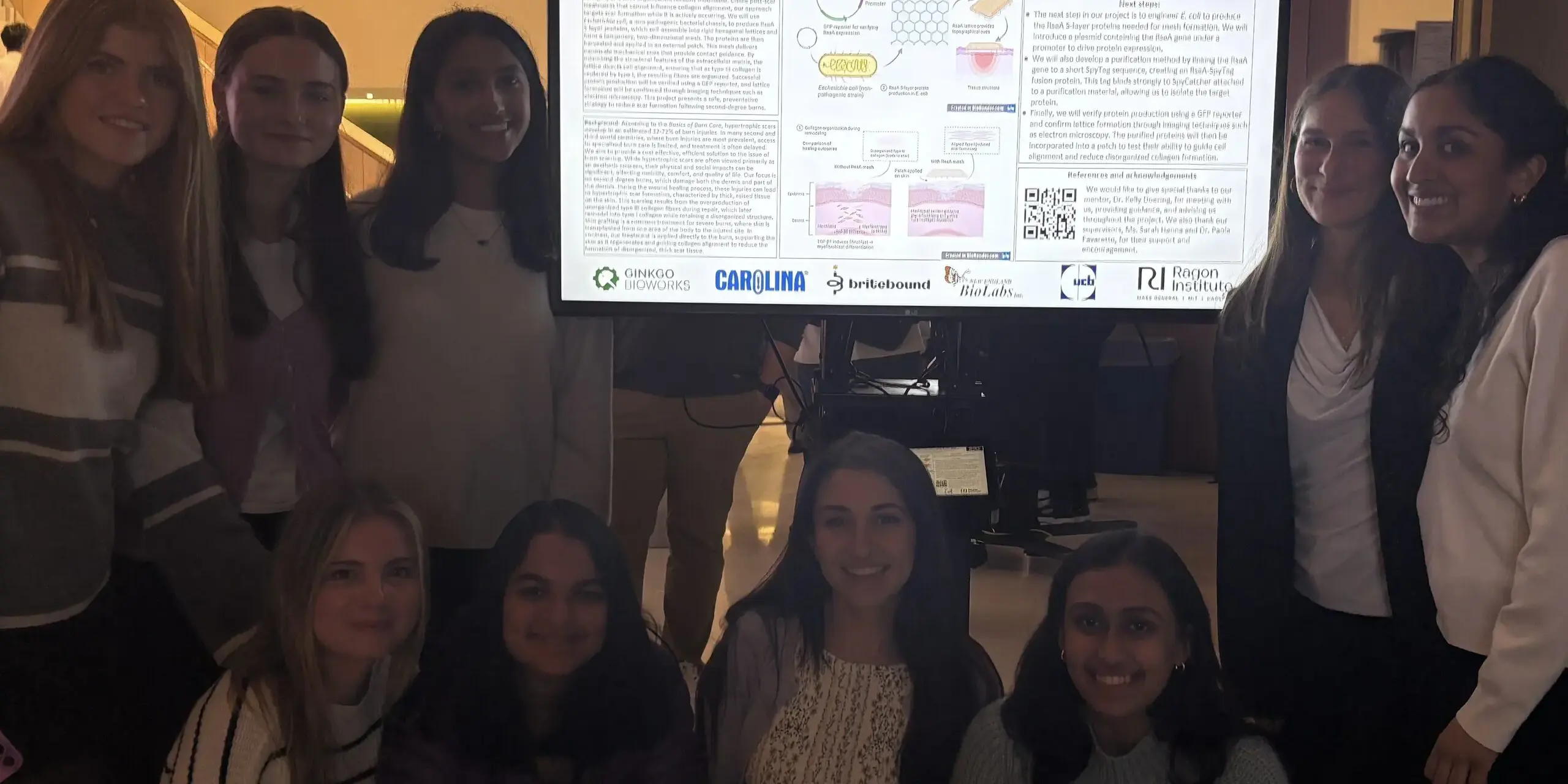
To conduct their research, the Montrose team met weekly throughout the year with bioengineer mentor Dr. Kelly Doering, supported by faculty supervisors Mrs. Sarah Colgan and Dr. Paola Favaretto. In addition to being selected for publication, the team presented their project in the spring at the BioBuilderClub Final Assembly held at The Ragon Institute of Mass General Brigham, MIT, and Harvard.
The team's project focuses on engineering bacteria to produce proteins that self-assemble into a microscopic, two-dimensional mesh that helps guide wound healing and reduce scarring after burns. This mesh structure would be placed on an external patch, designed for application during an actively healing burn wound. Second degree burns damage both the outer and deeper layers of the skin. As the wound repairs itself, the body rapidly deposits unorganized collagen fibers, resulting in thick, raised scar tissue. By mimicking the structural framework of natural skin tissue, the microscopic mesh delivers physical contact guidance inside a temporary skin patch. This mechanical guidance directs surrounding cells to align new collagen fibers properly while healing is actively taking place, preventing disorganized scar tissue from forming.
For the next steps of their project, the team hopes to engineer the bacteria to produce and purify the proteins in the lab, confirm the mesh structure using high powered electron microscopes, and test the patch’s ability to reduce scarring.
Congratulations to our soon-to-be published scientists!