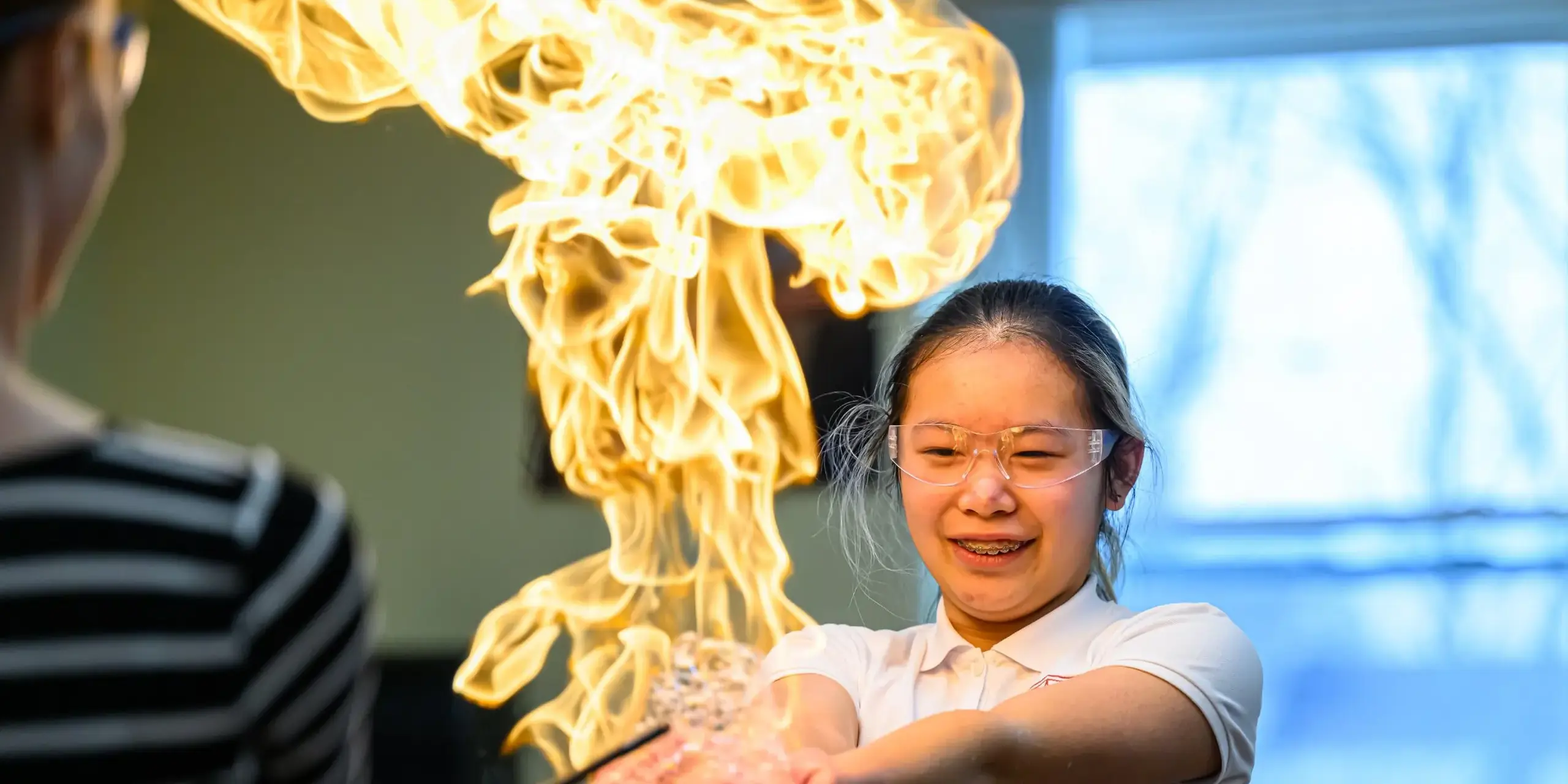

Our Unique Science curriculum
The mission of the Science Department is to encourage all students to develop the skills of logical inquiry and investigation; ensure that individual students learn the foundations of science necessary for success in college and in life; expose students to technological excellence in the classroom; and to promote in them reflection about the origins and meaning of human life.
OUR science DEPARTMENT OFFERINGS
| Grade 6: integrated science 6 |
|---|
| This course introduces the nature of science through the exploration of Earth science and cell biology. Students will investigate the scientific method, the structure and processes of the Earth, and the basic functioning of cells. They will learn the principles of observation, experimentation, and proper reporting of findings. The first half of the course focuses on cell biology and the second half of the course focuses on Earth science. Students will be given several opportunities to develop critical thinking skills and to apply the skills of the scientific method. |
| grade 7: integrated science 7 |
| This course encourages students to explore and investigate key concepts in the scientific method, ecology, motion, force, energy, and the formation of stars. Delivered in an interactive, inquiry based environment, the curriculum helps students visualize and connect these scientific principles. Students hone their critical thinking and science process skills by applying the scientific method through various projects, including designing their own wetland experiments. They must pitch their ideas and win the class over before executing their plans. Active problem solving and careful observation are integrated throughout every investigation. |
| grade 8: middle school chemistry |
| Middle School Chemistry is a full-year hands-on course devoted to the study of matter and scientific investigation. Students explore the world of atoms and molecules through hands-on, inquiry-based activities and molecular model animations. Science experimentation builds physical science and inquiry skills, highlighting the states of matter, density, solubility, and chemical change. Molecular model animations and illustrations will enhance content knowledge of physical science phenomena. A detailed laboratory notebook is meticulously kept as they learn how to communicate their findings in a scientific setting. |
| grade 9: biology cp |
| In this course, 9th grade students explore the fundamental principles of biology, focusing on macromolecules, cell structure and function, cell transport, cellular division, DNA structure and replication, and protein synthesis. Through the study of meiosis and genetics, students examine inheritance, genetic variation, and patterns of heredity. Students also explore ecology, including ecosystems, energy flow, and the relationships between organisms and their environments. The course continues with an exploration of evolution, natural selection, adaptation, and the mechanisms that contribute to the diversity of life on Earth. Students conclude the course with a study of photosynthesis and cellular respiration, examining how organisms capture, transform, and utilize energy to sustain life. Throughout the course, students engage in hands-on laboratory investigations, modeling activities, simulations, and independent projects that connect theoretical concepts to practical applications. These experiences strengthen critical thinking, analytical reasoning, and scientific process skills. |
|
grade 9: biology honors |
| This is an accelerated introductory biology course in which 9th grade students explore biochemistry, macromolecules, the structure and function of cells and cell membranes, photosynthesis, respiration, cellular reproduction, and analyze the fundamentals of genetics and protein synthesis. Students also develop an understanding of broader topics including the classification systems of life, plant structure and function, animal structure and function, and ecology. Throughout the course students apply the scientific technique through advanced laboratory investigations both in and out of the classroom. Students will discover the starch content of common foods, explore osmosis through egg membranes, extract pigments from spinach leaves, observe chromosomes in onion cells, model genetic drift, and measure water loss via transpiration in tomato plants. To connect the unit on ecology to the real world, students will observe and collect data from Montrose’s wetlands. |
| grades 10/12: ap biology |
| AP Biology students will develop greater understanding of biochemistry, macromolecules, the structure and function of cells and cell membranes, photosynthesis, respiration, cell signalling, cellular reproduction, and analyze the fundamentals of genetics, protein synthesis, and current DNA technology methods. They also broaden their understanding of such topics as the classification systems of life, micro-organisms and their impact on human health, plants, animals, and human anatomy, physiology and ecology. Students learn to gather and analyze data on a wide range of topics. In preparing for the AP exam, they develop scientific literacy in reading and interpreting graphs and diagrams from peer-reviewed papers. Students enhance their understanding of scientific technique and develop their critical thinking skills through lab investigations, including observing amyloplasts in banana cells, measuring respiration in yeast, and transforming E. coli with a fluorescent gene. All students in this course will take the AP exam in May. |
| grade 10: chemistry cp |
| This course offers an introduction to chemistry and includes study of the scientific method and measurement, the quantum model, periodic law, chemical bonding, chemical reactions, stoichiometry, and states of matter. Students are challenged to enhance their logical reasoning by synthesizing the concepts and practical applications they learn. Laboratory work develops students’ expertise in experimental design and procedure as well as the techniques of data collection, analysis and interpretation. Engaging in active experimentation equips students with critical thinking, problem solving, creative and collaborative skills. |
| grade 10: Chemistry honors |
| This course is designed to give students an advanced introduction to the properties of matter and how these properties interact, change and combine as a result of chemical and physical processes. The honors course moves at a fast pace and is designed to give students an in-depth experience learning chemistry concepts via lectures, interactive activities, experiments, and scientific reasoning. Topics studied will include: dimensional analysis, properties of matter, atomic structure and theory, the quantum model, periodic law, chemical bonding, chemical reactions, stoichiometry, and gases. Chemistry labs develop strong skills such as lab safety and precise measurements, recording keen observations, analyzing data and interpreting results as well as communicating results. Students develop critical thinking, problem-solving, creative and collaborative skills and are expected to use a high level of analytical and abstract reasoning as they develop a solid understanding of chemical concepts and applications. |
| grades 11/12: AP chemistry |
| AP Chemistry is a college-level introductory chemistry course offered to 11th and 12th grade students that covers the material of two semesters of college chemistry. Students cultivate their understanding of chemistry through inquiry-based lab investigations as they explore the six science principles: models and representation; question and method; representing data and phenomena; model analysis; mathematical routines; and argumentation. Units include: atomic structure and properties, molecular and ionic compound structure and properties, intermolecular forces and properties, chemical reactions, kinetics, thermodynamics and applications, equilibrium, and acids and bases. This rigorous course allows students to understand the world around them and provides the scientific lens they need to decode the hidden reactions shaping our daily environment. All students in this class will take the AP exam in May. |
| grade 11: physics cp |
| Physics CP is an engaging, lab-centric 11th grade course that explores the fundamental laws governing our physical world through real-world applications and inquiry based learning. Students build strong conceptual and mathematical reasoning skills as they investigate motion, forces, energy, momentum, electrostatics, DC Circuits, and magnetism. Emphasizing hands-on experimentation, students learn to design experiments, analyze empirical data, and model physical phenomena using multiple representations - including graphs, diagrams, and equations. Upon completion, students will be equipped to explain how everyday systems operate and justify their scientific conclusions with thorough physical reasoning. |
| grade 11: physics honors |
| Honors Physics is a rigorous, algebra-based 11th grade course designed to help students understand the mechanics of the physical world through conceptual analysis and mathematical problem solving. Sudents explore foundational physical principles including kinematics, dynamics, energy, momentum, simple harmonic motion, rotational motion, and fluids. The curriculum emphasizes critical thinking, mathematical reasoning, and experimental design, serving as an excellent foundation for future studies. Students will complete a comprehensive final project at the end of the semester which will demonstrate their understanding of all of the units of physics studied during the year. |
| grades 11/12: ap physics 1 |
| AP Physics 1 is a rigorous, algebra-based introductory college level course designed for 11th grade students seeking an academic challenge in physical science. Through interactive instruction, collaborative problem solving, and hands-on inquiry labs, students explore foundational physical principles including kinematics, dynamics, energy, momentum, simple harmonic motion, rotational motion, and fluids. The curriculum emphasizes critical thinking, mathematical reasoning, and experimental design, serving as an exceptional foundation for future studies in medicine, engineering, technology, and physical and life sciences. All enrolled students are required to take the AP Physics 1 exam in May. |
| grade 12: dual enrollment calculus-based physics |
| anatomy & physiology |
| This year-long course introduces seniors to the basics of human anatomy and physiology. This course enables students to develop an understanding of the connections between the structure and functions of the human body in order to maintain a stable internal environment. Topics include the structure and function of cells and tissues, as well as the gross and microscopic anatomy of the muscular, nervous, endocrine, cardiovascular, lymphatic, immune, digestive, excretory, and reproductive systems. Students will learn via lectures, hands-on activities, labs, case studies, and research projects. While students develop acumen with medical terminology, coursework will also be tailored towards critical thinking and problem-solving skills. |
| AP principles of computer science |
| This course, offered to all upper school grades, introduces students to the breadth of the field of Computer Science and its impact on the modern world. The course explores foundational topics including programming, algorithms, abstraction, data structures, the Internet, cybersecurity, and the societal implications of computing technologies. Using the Python programming language, students design and develop computational artifacts that encourage creativity, enable self-expression, and solve real-world problems. All students taking AP Computer Science Principles are required to take the College Board AP Computer Science Principles Exam, which includes the submission of a computer program in the spring and a written exam in May. Prerequisite for 9th grade students is completion of Algebra I Honors with a 90 or higher and signature of the current math teacher. |
| ap computer science a |
| This course is equivalent to a semester-long introductory college course in computer science. Fundamental topics in this course include the design of computational solutions to problems, the use of data structures to organize data, and the implementation of algorithms to process data. The course emphasizes object-oriented programming using the Java programming language. Enrolled students are required to take the College Board AP Computer Science A Exam in May. Students who have not taken AP Principles of Computer Science will have summer work in preparation for taking AP Computer Science A. |
Imagine yourself here . . .
At Montrose, you’ll learn science by doing science. You’ll:
- Grab goggles and gloves first, because the laboratory is where science education lives.
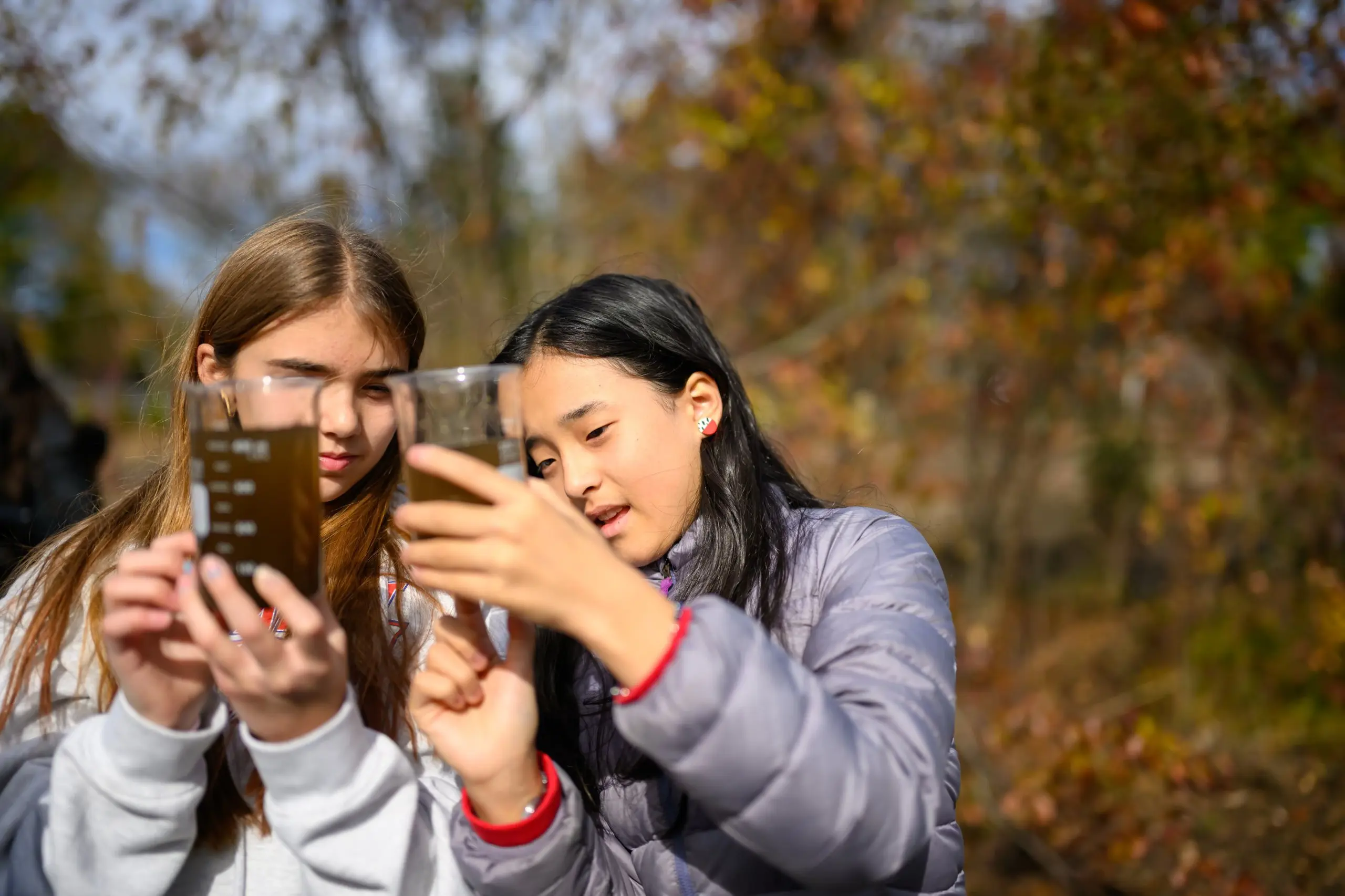
- Head into our wetlands to collect samples from the pond platform or don hip waders to track native plant growth, perhaps presenting your data to the town’s conservation committee.
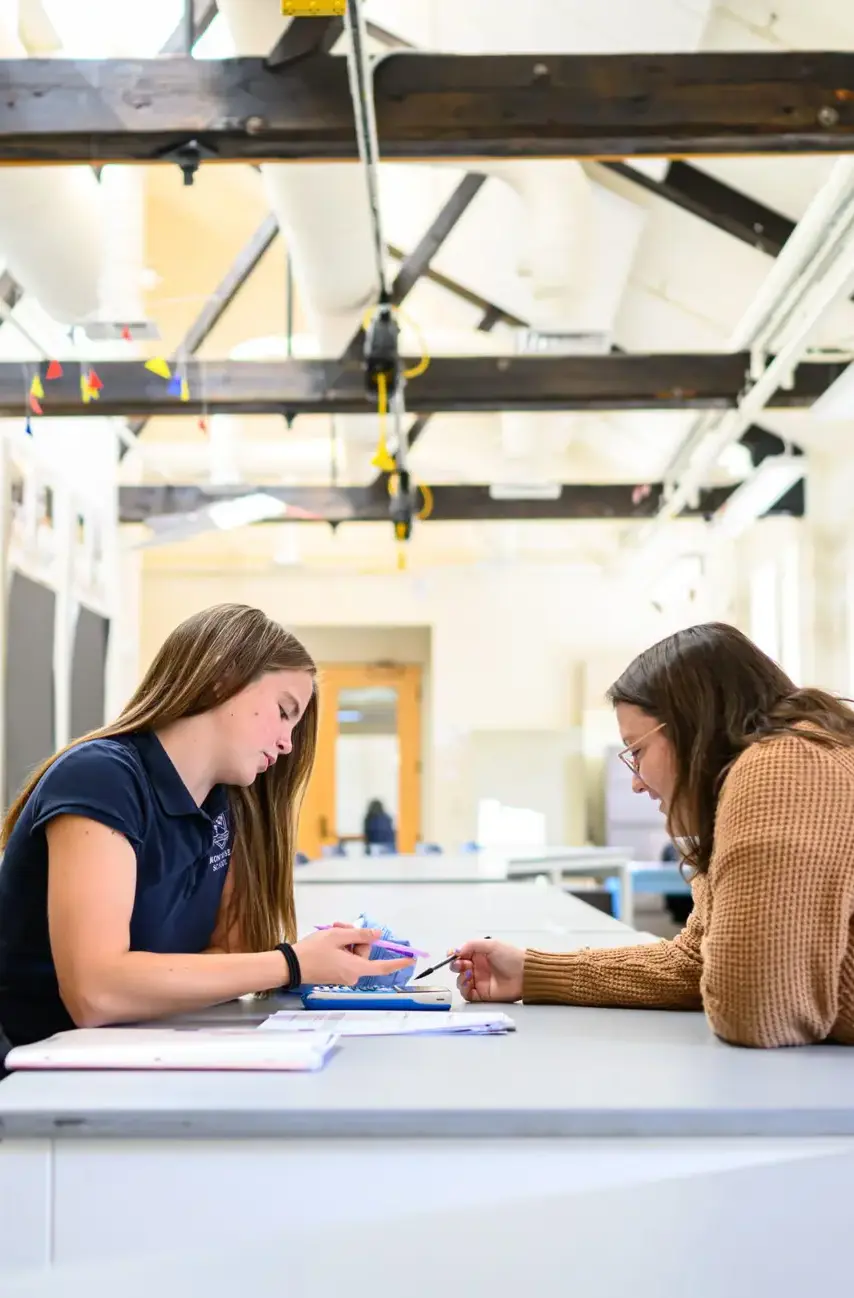
- Design experiments, make careful observations, analyze data, keep lab notebooks, and write meticulous lab reports.
- Support your claims with evidence and communicate your findings effectively.
- Build a rich conceptual foundation, always with an eye toward real-world problem-solving.
Your teachers bring industry experience to the lab, including a chemical engineer, a biomedical engineer specializing in bioinformatics, a wetland biologist, a physicist who trains physics teachers, and a doctor of veterinary medicine.
For girls who want to maximize their science education, our upper school STEM track offers the option to double up on lab classes.
A Montrose science education will pique your curiosity to understand the world we live in, both visible and invisible. You’ll be well practiced in the scientific method and how to reason and solve problems like a scientist. Many Montrose alumnae pursue STEM careers, inspired to contribute their innovations by real-world scientists in the classroom.
Science Faculty
M.B.A., University of Michigan Business School
M.A.T., Chemistry and Biology, University of Toronto
M.A., Liberal Arts, St. John’s College, Maryland (in process)
M.Ed., Science Education, Rutgers University
M.B.A., Babson College
D.V.M., Tufts University